Saturday, June 1, 2013

Blue

Krzysztof Kieslowski, the famed polish director, concluded his career with an ambitious masterpiece made up of three interconnected movies: Blue, White, and Red. Each film is named after a color of the French flag. Blue represents freedom. White stands for equality. Red is fraternity. Each film explores its color's core concept in intriguing, often ironic, ways. 

Blue starts with the sound of cars. An image of a freeway follows. The camera focuses on one car, and observes it, mainly from the outside. The intense ambient noises of the racing cars becomes unsettling. A child extends her hand out the window, holding a blue candy-wrapper that can be heard fluttering in the wind. Her ghostlike face can be seen through the windows of the car, but never directly. The car stops, and the girl gets out. Kieslowski cuts to a shot from beneath the car where some oil trickles down unnoticed. A voice can be heard calling to the child. Cut to a shot of the departing car. Cut to a young man by the side of the road, hoping to catch a ride. The car passes him by without stopping. The camera lingers on him. The style is simple and direct -- each different action gets only one shot -- and serves solely to create a sense of mounting dread. The crash takes place off screen; it it conveyed, as the most important elements of the movie, through the soundtrack. Blue represents freedom. Julie is freed from family. 

While Julie recovers at the hospital, she finds out that her husband and daughter died on the car crash. The audience sympathizes instantly, but is kept at a distance by Julie, just as she tries to do with all others around her. She feels hopeless and tries to commit suicide, but she is unable to end her life. She holds on to some unexplained reason to keep going, so she keeps on living. Kieslowski could be described as a pessimist, but that would be grossly inaccurate. He fascinates because he never fully gives up hope in his characters. They are always redeemable, even when they reach their lowest points. 

Julie sells her house, gets rid of all of her possessions and moves to an empty apartment in Paris for a fresh start. For a while, she lives alone, and talks to no one. From her window, she sees a man being beaten by three others. She wishes to help him as he runs past her front door, but ultimately she remains motionless inside her safe apartment. Soon after, she helps a neighbor in need and shows kindness to a homeless man. Behind the steely facade is a decent human being beginning  to resurface. 

Kieslowski's films are filled with chance encounters and near-misses. Had the young man from the start of the movie taken a ride on that car, he would have been dead. Instead, he lives. Seemingly out of the blue, he finds Julie and reminds her what happened that day. He is Julie's remaining link to her past life, so Julie treats him suspiciously, almost aggressively  He found Julie to give her a crucifix that he recovered from the crash site. He also wanted to give her the last words her husband said to her: "Now try coughing." It is the punchline of a joke her husband was telling. It seems like a throwaway line, but earlier in the movie, Julie asserts that she is human because she sweats, cries and coughs. 

But after the initial shock of the accident, she stops being human, she dulls the pain and tries to escape, leaving her remaining friends and relatives behind. Julie uses her new, minimalist apartment, and endless swimming bouts to escape and forget, to attain freedom from her family and her memories. Still, they come rushing back to her, because that young man never got in the car. All of a sudden, the things she was running from start to catch up to her and overwhelm her. 

Her husband was a composer. He was writing a symphony for the unification of Europe. Whenever she thinks of him or her child, the rousing music overtakes the soundtrack. The screen fades to black and all that remains is the music. Julie still seeks to escape, yet she hears it even when she is deep under water where she thinks no one can reach her. The music keeps coming back in different forms. She sees in the news that her husband's friend will seek to finish the piece. She thought she had destroyed the last copy, but it somehow survived. At one point, it is suggested that Julie wrote the music, and thus cannot get rid of it so easily since it invades her consciousness. 
It takes a while, but Julie starts giving in. She visits her ailing mother in a nursing home and kindly helps her husband's pregnant mistress. She even contributes to finishing the symphony. Her "freedom," was a form of self defense; selfish, perhaps, but who can blame her? Once she confronts the aspects of her life she would most like to forget, she finally begins to move forward and evolve. Throughout the movie, Juliette Binoche shows very little emotion. Her character is made comprehensible by the images and sounds presented by the director. But in the final seconds of the movie, Binoche breaks Julie's facade. She smiles.  

Random Thoughts.
-In all three films the main characters see a woman trying to place a bottle into a recycling bin. Julie does not help her.
- The protagonist of White can be seen here. The lives of the characters in the three movies are interconnected although it is not clear until the third movie.
- Red is the best. 
-At one of her lowest points, a reckless Julie tries to hurt herself by dragging her knuckles through a stone wall. Without a single word of dialogue, Kieslowski and Binonche convey just how much in need of help Julie really is. Although not very graphic, this is one of the most painful images I've seen. 
-There is little warmth in the visuals. The color blue invades the screen every shot of the movie. It perfectly conveys the unbearable sadness caused by Julie's tremendous loss.
-I don't know what to make of it, but my favorite shot of the movie is this image of a black coffee stain completely overtaking a white little sugar cube:


Verdict- 4/4 
Blue (1993) 1h 38min. R 

Wednesday, May 22, 2013

Iron Man 3


The plot of Iron Man 3 exists as an excuse to bounce around from one obligatory action sequence to another and nothing more. Essentially, it's the same as in the first two movies. In the past, Tony Stark (Robert Downey Jr.) made some guy angry (justifiably, this time), and that guy turned out to be a mad scientist interested in genetic research who created his own version of the iron man (resembling another Marvel superhero, the Human Torch, from Fantastic Four) to combat Stark and rule the world. In that sense, I got exactly what I expected. The only pleasant surprise the film contains is that at one point in the movie Iron Man is "killed" and Stark is thus able to disappear to the middle of nowhere where he befriends a kid who just happens to be Iron Man's number one fan and smart enough to help him rebuild the suit. The back and forth banter is delightful as the kid proves to be Stark's equal in conversation and  their scenes together become the highlight of the film and keep the tone light enough to balance the darker aspects of the movie such as Stark's depression and panic attacks which he experiences due to his near-death incident in "The Avengers." 

I don't need for all of my superhero films to be deep and intricately constructed stories. I like a simple good vs. evil battle. However, Iron Man 3 falls short in the most important area for a superhero movie. Ultimately, it doesn't have a compelling villain. Where Jeff Bridges and Mickey Rourke brought genuine menace to their disgruntled antagonists, Guy Pearce just seems like a whiny kid in comparison. He doesn't inspire fear. As for the Mandarin, he ends up being the biggest disappointment in the film as he turns out to be more of a punchline than a commentary on modern global terrorism which it attempts to be. 

The best thing the movie has going for it is the breathtaking, CGI infused action, which is the reason the film was even made: to enchant worldwide audiences who can universally enjoy watching stuff blow up. The "barrel of monkeys at 18000 feel" scene in which Stark rescues a dozen of free falling bodies  is ingenious. Also, the pulverization of Tony's  mansion merits praise and is a great feat of special effects. Finally, the smaller, back to basics, Tony-with-a-gun-and-some-toys-he-bought-at-the-store, are great fun even though they' re in a completely different scale from the rest of the movie. 

As always, Colonel James Rhodes, or Iron Patriot, joins Stark to blow things up. A lot is made out of the fact that his name went from War Machine to Iron Patriot. It's a joke that works the first time, but is given too much weight and becomes irritating by the fourth time. Aside from that, Don Cheadle is as funny as ever. Too bad there wasn't a scene with the Rhodes Stark and the kid. 

Finally, Pepper Potts does get her second in the spotlight, and she gets the most to do here out of all the films she's been in. She even becomes "iron woman" for a scene! Still, I would have liked to see more of her. Part of my disappointment has to do with the fact that the trailers made me think that she would play a more essential role, but even if I hadn't been misled by the publicity, I still feel that the character, and the wonderful actress that plays her (Gwyneth Paltrow) deserve a better storyline than being merely the exasperated girlfriend of a superstar/superhero or at the very least, she deserved some more screen time.  

The movie, as all blockbusters nowadays, ends with a post credit scene that gives director Shane Black an excuse for Stark to narrate the movie. It was a nice touch, but since he was going to imitate his other feature with Robert Downey Jr, Kiss Kiss Bang, Bang, Black should have gone further. I would have liked more interruptions from Stark and would have liked to see him as a different character from the depressed Stark within the story, and more like his old self (since he is narrating from a time when he's been cured of his depression). There was a lot of unexplored potential here just like with the Mandarin and Pepper Potts. 

Iron Man 3 attempts to be fresh, quick paced and clever, but it feels a little bloated and the dialogue , full of one-liners, is very hit and miss and not quite up to the standard I expected from Kiss Kiss Bang Bang and the two previous Iron Man movies. This is an entertaining movie, not a great one, but still a decent way to start the summer. 

Verdict- 2.5/4 
Iron Man 3 (2013) 2h 10 min PG-13

Tuesday, May 14, 2013

End of Watch


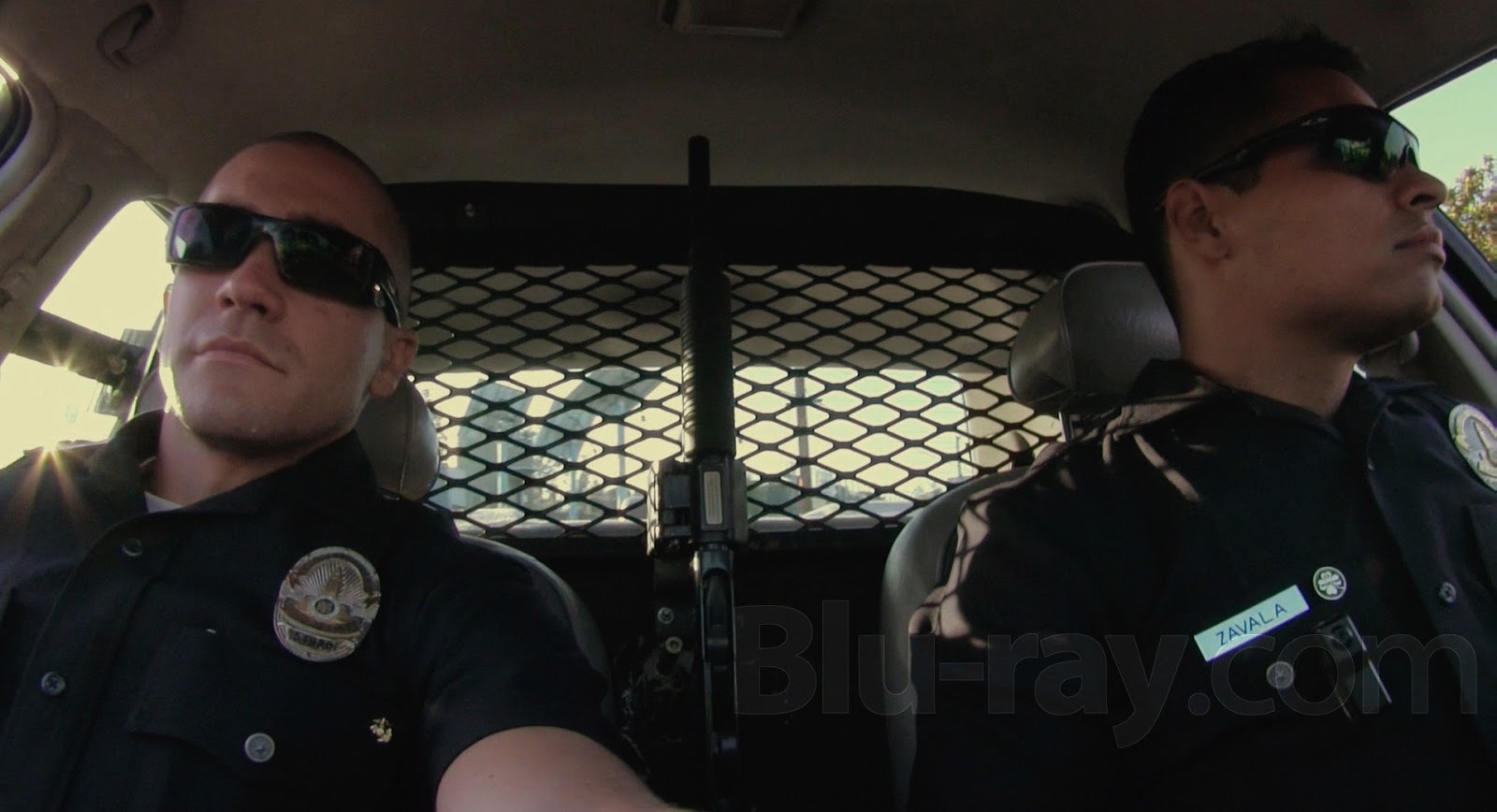
The first half of “End of Watch” establishes the routine of officers Taylor and Zavalia, two LAPD cops and best friends, as they drive around the city making arrests and engaging in the occasional chases and shoot-outs. It is quick paced, and a lot of fun. Aside from an electrifying opening chase and a speech by Taylor, this looks like a standard cop movie. The most thrilling scene here is a fistfight between Zavalia and a criminal who gives his respect once he is fairly beaten “gangster” style, in the man’s own word. 

The second half is where the film becomes exceptional. Plot-wise, it depicts what happens when the two, over-dedicated policemen get a little fed up by the law and decide to take matters into their own hands. Taylor becomes exasperated by the horrors he’s seen a Mexican cartel commit and decides to investigate them further with the help of his partner and nothing more. Here, the dedication that these men have to protect the public becomes evident. Neither thinks twice of giving up his life for someone else. The only scene in which Taylor is not present is of an unnamed police officer, seen only at Taylor’s wedding, telling the story of how Taylor jumped in front of a bullet to save him. 

Zavalia is the stereotypical Mexican American character. He has a big and unified family and a faithful wife he's been with since high school. He even curses in Spanish occasionally and complies with all the little details one would expect from a Mexican American character. But he's a compelling character precisely because he's aware that he's a stereotype. This gives him the the opportunity to make self-referential jokes constantly, something that becomes one of the film’s main strengths:"Just because I look like the dudes from Home Depot," he tells his partner about the work his wife is making him do at home, "doesn't mean I do the shit that the Home Depot dudes do." The delivery of the lines perhaps makes these moments more memorable than they should. Michael Peña doesn’t strike a wrong note. Every one of his lines is gold. 

Taylor is more of a mystery and harder to pin down. He’s always looking to improve himself. He takes  college courses. He looks for, and eventually finds, a wife whom he considers smarter than him. He wants to be challenged. No one is more dedicated to the job than he is. And yet, he’s often reckless and immature, constantly playing pranks on his fellow officers and walking into dangerous situations. At first glance, both aspects of his personality seem irreconcilable, but Jake Gyllenhaal is able to bring them together to make a very believable character. 

Most of the film consists of dialogue between the two old friends, so at least half of the movie could be called a comedy. However, a chilling aspect of the lives of our main characters is how quickly their luck can turn. One minute Taylor and Zavalia can be sitting in their car, talking about their high school days, and the next they can be running into a burning building or engaged in a massive shootout.
  
The film uses a lot of handheld cameras and looks purposefully amateurish. The style is explained by Taylor's filmmaking class; he simply records all of his activities. The style doesn't get tiring because the editing is not as quick as a regular action film, but it still feels vibrant because the camera never stops moving as it follows Taylor and Zavalia into all sorts of crazy situations. There's plenty of suspenseful searches, all shot from the first person camera. There's also a few shootouts that place the audience in both the shoes of the cops and the criminals who also happen to have a camera with them. 

Occasionally, the director will give his own point of view. It is used mostly to give aerial shots of Los Angeles. These are wisely used to start and end scenes, giving the audience time to digest what they have seen and heard. The film doesn't sugarcoat the violence, which certainly takes its toll, but the director also gives the audience time to process his quick fire dialogue which, even in its crass delivery, gives plenty of food for thought: "You feel like a hero?"asks Taylor to his partner. They're both being called "heroes" but neither is comfortable with it, so they avoid the subject. In another touching scene, they discuss whether or not they would want their children to become police officers. 

Few films tackle what it means to be a police officer as well as "End of Watch." The police are shown as regular men and women. Taylor is a bachelor who's ready to settle down. Zavalia has a wife and a kid. The two are the most fleshed out characters, but we also get to see their "sarge", a good man whose job it is to keep the bash brothers under control, as well as Van Hauser, a stickler for the rules who complains when they get all the glory instead of being chastised, and Orozco, the toughest, female, cop. 

All of the cops have strengths, weaknesses, families, friends, and enemies (even amongst themselves), but it's amazing to watch how quickly Taylor and Zavala, along with every other police officer shown in the movie, drop their quibbles and personal feuds to do their job as soon as they're needed.

 "Behind my badge is a heart like yours. I bleed, I think, I love, and yes I can be killed. And although I am but one man, I have thousands of brothers and sisters who are the same as me." Taylor's speech at the start of the film is a beauty. Comprehensive, concise, thoughtful, badass. It neatly sums up what the film will be about, what the police is really about. The respect that the director has for the police is evident in every frame of the film, but it is most poignant in the final credits when the dedication of the film rolls by with the credits. 

Verdict- 3.5/4 
End of Watch (2012) 1h 49min R. 

Saturday, May 4, 2013

The Tree of Life, some scattered thoughts


For the uninitiated on the greatest living director Terrence Malick and his masterpiece, The Tree of Life: The film is about a man, Jack O’Brien, who, during a midlife crisis brought on by the anniversary of the death of his younger brother, reflects on his childhood, which takes up most of the movie, and of humanity's place in the universe, which gives Malick  a chance to show the birth and end of the universe along with his visions of God and an afterlife. The movie seeks to encompass all of life... 

Writing about most movies is fairly simple. I watch the movie, feel a certain way about it, have clearly identifiable ideas because of it. The emotions have names; the ideas come in the form of words. I organize those words into a coherent whole and I'm done.

 The Tree of Life is not most movies. I have watched it over ten times and never once thought of something I could write that would properly reflect my admiration of (and whole-hearted devotion to) it.

My thoughts concerning The Tree of Life have been so difficult to write because the experience of watching it, I think, cannot be adequately explained or contained by a single language. A great number of films are beholden to their scripts. They could essentially work as novels; The Tree of Life could only ever work (for me, at least) as a film.

A theme of the movie, and of the latest period in Malick's career (as can be seen in The New World), is the inadequacy of language and the inability of verbal communication to bring people together. His films are full of the whispered thoughts of characters who feel misunderstood. "I want to be where they are," says Jack of his brothers after his loss of innocence. But he can't convey that to anyone but himself, and  even then, his words only provide clues as to what he's feeling. Most of the information comes from his rash and violent actions, his body language and his desperate looks. 

As soon as I start watching it, The Tree of Life evokes memories in me; every time, it taps into my subconscious and brings back images, sounds, smells, even textures. The wealth of  low angle shots, always looking up with a child's marvelous curiosity, instantly transport me. When I watch The Tree of Life, I'm at my grandmother's house drinking iced tea and playing in the yard with my brother and my cousins. The Tree of Life takes me to a place I have not been to in years and will likely never visit again. For that, I am eternally grateful. 

I’m grateful for:
Father (Brad Pitt), a force of nature, stern, but ever-loving. Mother (Jessica Chastain), pure love, perfection. Both actors, both characters, stunningly convincing, never striking a wrong note. 

Jack (Hunter McKraken) the boy who, on the brink of adulthood, honestly wrestles with the questions every child must one day face.

 Jack (Sean Penn) the tired, lost man who turns to God when his life no longer makes sense. 

R.L (Laramie Eppler), the true personification of what the film calls "grace," who unified a family through pure goodness of heart. 

I am grateful for:
The production designer, Jack Fisk, who got every detail from the chairs, tables and water glasses, to the decoration of the home, right, and who succeeded in making the sets specific enough for this particular story to work and generic enough to transport anyone back to his childhood home. 

The special effects supervisor, Douglas Trumbull, who gave  his breathtaking, awe-inspiring account of the creation of the universe, even more memorable, if that is possible, than his images from "2001"
The composer, Alexander Desplat, whose tear inducing melodies (in a good way) stand their ground against the masterful music of Bach, Berlioz, and Mozart, just to name a few. 

The cinematographer, Emmanuel Lubezki, who proved that celluloid film lives, that handheld camera movements do not have to equal visual disorientation and, most importantly, who, by  using only available light, showed the infinite wonders inherent in the natural world.
Finally, I am grateful for (and to) the writer, director, poet, philosopher, theologian, humanist, Terrence Malick, who brought together all of this talent and proved that there is room for thoughtful, meditative films in the otherwise barren landscape of modern mainstream cinema. 

Tree of Life (2011) 2h 19min PG-13
Verdict- 4/4 
Directed by Terrence Malick
Other pieces concerning The Tree of Life that are worth reading: 


and finally the reason I finally got around to writing about this film is that according to its cinematographer Emmanuel Lubezki and its editor Billy Webber, Malick is working on a “director’s cut” which is reportedly around 6hrs and could come out as early as 2014! 

Thursday, April 18, 2013

L'Avventura


L’ Avventura starts with Anna, a young and wealthy socialite, walking towards the camera at a leisurely pace. The camera tracks back as she exits her house, carefully following her movement. She stops to converse with her father, but ignores his advice and strides away with her friend Claudia to spend a weekend with her in a yacht. 
The characters in the film just seem to drift along through their lives. They walk around aimlessly, rarely, if ever, achieving what they set out to do. In fact,the rest of the plot centers on just that: a purposeless, never-ending journey.  

Anna, who is joined in the yacht trip by Sandro, her fiancé, strolls out of sight of the camera and her friends and is never seen again. She disappears on a barren wasteland of an island that was their destination. Claudia and Sandro spend most of the film looking for her. On their journey, they embark on a romantic relationship. Plot-wise, there is nothing more to L’Avventura. 

But L’Avventura is not significant because of what happens to its characters on the surface (although abandoning the main character after a quarter of the film is remarkable); it is significant because of the tensions they feel within themselves and the way director Michelangelo Antonioni is able to visualize these feelings. 

Take, for example, Claudia and the way Antonioni uses her surroundings to dwarf her.The island with its sharp, jagged stones and high cliffs is one of the loneliest locales ever presented in a film. Surrounded by water, there is nothing in sight but the characters and their thoughts. The isolation inspired by the empty lifestyle of these wealthy friends is a key theme of the movie. Claudia is always tiny, always to the side of the frame or with her back to a wall. 

 These characters are so empty their biggest fear is that they will simply vanish without a trace. 

A recurring visual of the film is one of Claudia and Sandro turning away from every priests and nun they happen to walk by. They turn their backs to tradition, marriage, and religion. Antonioni doesn’t condemn his characters for their modern lifestyles, he simply observes, noting their unhappiness. 

On their journey, they encounter a lot of empty churches and towns. They also attend several extravagant parties, always full of people, but the facade of the atmosphere is transparent. All of the sensory pleasures in the world fail to provide them happiness.These people seem unable of enjoying their luxuries. 

The characters sometimes express their existential anxieties, but for the most part they keep quiet and leave it to Antonioni to reveal their thoughts through his perfectly composed images and sparse use of music. In one lonely shot, Claudia lays down exhausted on top of her luggage almost as if she didn’t have the energy to keep living the way she has been. The ghost of Anna seems to haunt Claudia, reminding her that the life she lives with Sandro should not be hers. Anna’s body is never found. As far as Claudia is concerned, her best friend could turn up any second, so she lives her life in agony. 

“L’Avventura, over two hours of nothing!” That will be the initial conclusion of many. I had to watch it twice just to begin to understand it. I’m not sure if I fully comprehend it. All I know is that I want to watch it a third time. I think it has something to do with the final shot. Two and a half hours of nothing? maybe. But then, there’s this shot.