Sunday, January 27, 2013

The Truthfulness of the Cinematic Image Part I: A Moment of Innocence


In every film there is an understanding by the audience that they are watching a story, or a collection of sound an images, from the point of view of a director. Even documentaries do not necessarily show the truth. A documentary comes closer to the truth than most fictional films, but it is still the product of the vision of one director. Most films leave the question of truth at that. The audience knows it is watching the film from the point of view of another person, but whatever happens in the narrative, inside of the world the director created, is normally taken at face value. In the film Rashomon, which I will look at in Part II, Akira Kurosawa goes beyond, to explore the question of the truthfulness of the individual, through the use of flashbacks, which he accomplishes in a purely fictional film. In A Moment of Innocence, Mohsen Makhmalbaf starts off with an actual, documented historical event, and from there he tries recreate it, mold it into what he dreamed the truth could have been, and what he currently wishes it had been. 

Mohsen Makhmalbaf was a young Iranian revolutionary who stabbed a police officer to get his gun, then steal a bank and give away the money to support his cause. It seems that over time, he became regretful of what he did, and made a film to express his feelings. Part of his plan was to recreate, with young actors, the scene of the stabbing. A Moment of Innocence ends with the pivotal moment in which the young Makhmalbaf is supposed to stab the officer, but he backs off, and instead offers the officer some bread. Simultaneously, the young officer, with the knowledge that he would be attacked, hands him a flower. In one of the most shocking final shots in all of cinema, the frame freezes, and the audience is left looking at the image of two sworn enemies making peace with one another as the credits roll by slowly. The audience should not feel cheated. This moment of innocence is false in that it did not correspond to what happened to Makhmalbaf in real life, but it is also true and sincere because it did not violate the integrity of the story, or the characters. Both the young Makhmalbaf and the young police officer within the film had expressed their doubts about the upcoming incident. In fact, when young Makhmalbaf was supposed to stab the officer the first time, he broke down in tears, and could not go through with it. The final moment fits in well with the larger narrative of these two innocent characters. It is an example that we are watching the vision of the real Makhmalbaf, the director ex-revolutionary, who now wishes he had taken a moment, like the young hero of the film, to think about what he was going to do and change his mind. The final moment is what he now wishes the truth would have been.

Makhmalbaf goes further in exploring the truth of the cinematic image. Within A Moment of Innocence, the film of Makhmalbaf the director, is a false documentary concerning Makhmalbaf, the character, trying to recreate the incident that changed his life. Although it is not immediately obvious, there are several signs that show this is a “mockumentary.” First is the clapperboard which appears before several scenes. It makes the upcoming scene seem like an outtake, in which the actors normally get out of character, and “play themselves.” For example, in one scene, the police officer turned actor is filmed saying that he wants to play himself. That is a natural reaction, it feels unscripted, like it would not be in a fiction film. Also, there is a scene in the beginning in which the police officer goes looking for Makhmalbaf at his home. In a real documentary, there would be no one filming this part of the story, but since the scene is taking place within Makhmalbaf actual fictional feature film, Makhmalbaf is there filming it, giving a subtle hint to his audience that the scene is staged. Most of the film takes place at this level, in the “mockumentary” concerning the making of a film recreating the stabbing. Therefore, the scenes portraying Makhmalbaf and the officer training their younger selves should be taken at face value, as any other film should. The characters we see are two men defeated, who were humiliated in their youth, and have the chance to go back to the pivotal event which changed their lives. Both characters are angry, Makhmalbaf for failing in his mission, and the officer for letting himself be fooled by a girl who merely pretended to love him. Perhaps, these characters are versions of the actual officer and Makhmalbaf who were, at that time, working together to make the film. The real people seem to have overcome this event, but their characters, played by themselves, are part of an elaborate “what if” fantasy where they could go back and do complete their missions right. That is why the Makhmalbaf character urges his younger self to go through with the stabbing, and why the officer tells his younger self to shoot anyone who comes near. The characters, like many characters in several films, can be seen as projections of the actual filmmakers and can therefore claim some semblance of truth. 

Verdict- 3.5/4
A Moment of Innocence (1996) 1h 18min.

Note- Unfortunately A Moment of Innocence is almost impossible to find since the distributor went bankrupt. However, Rashomon, which I will write about in Part II, is easily available and I highly recommend buying/renting it.

Friday, January 18, 2013

Zero Dark Thirty


Zero Dark Thirty begins, as any other movie, with the logos of the production companies that made and distributed it. No one cares about them. Judging by the amount of chatter in the audience, they could almost be regarded as part of the countless trailers, not as part of the movie. Then, Kathryn Bigelow, the director, does something highly unusual. The screen fades to black, leaving the audience in a completely dark and silent environment. Bigelow has the film begin not with an image, but with sound. Some white noise. A woman's distressed voice. She is a victim trapped inside one of the twin towers, making a 911 emergency call. The building collapses. White noise. Those chilling, harrowing opening moments earned everyone's undivided attention. There were no phones, and no lights. No one could be heard talking or eating popcorn. This was, at the same time, the most peaceful and distressing movie going experience I have had in years. 

The movie becomes a procedural. It follows, in detail, the decade-long hunt for Osama Bin Laden by Maya (Jessica Chastain), a young CIA operative. While watching the film, I kept thinking of David Fincher's  Zodiac which followed the still unresolved investigation of the Zodiac killer. While making the film, Fincher believed that he had to get everything exactly as it happened. If the information he wanted to use for the film was not in the police reports, he discarded it immediately. I do not know what details of the investigation are accurate in Zero Dark Thirty.  I do know, however, that the way Maya gains, analyzes and builds upon the evidence she finds feels authentic. Even if elements of the real search were altered, the search onscreen is immensely detailed, convincing, and engaging.  What else can one ask from a fiction film? 


When asked by the CIA director what other tasks she had accomplished for the agency, Maya answers that she had done nothing else. We learn she had been recruited right out of high school with the sole task of hunting Osama Bin Laden. It is fascinating to see how Maya's obsession grows over the course of the film as she carefully and repeatedly reviews documents, videos, pictures, and just about any piece of information that might lead to Bin Laden's location while at the same time alienating all friends and coworkers. At one point, Maya starts writing  on the window of her boss's office the number of days the CIA has known the location of Bin Laden without taking action.
"I know certainty freaks you guys out, but its 100%"

Not only is Maya obsessed with every aspect of the hunt, but she is certain that she is right 100% of the time. She is not hesitant to confront her bosses when they are making mistakes, or to discard popular leads she think will go nowhere while laboring over seemingly inconsequential pieces of evidence no one in the CIA thinks are worth exploring. Maya could come off as highly unlikeable, but she doesn't because she somehow manages to be  right 100% of the time. Her superiors recognize it, the audience recognizes it, and that is why we bear with her for 2 1/2+ hours (or, in the case of her superiors, 10 years). 

The film reaches its climax with the raid on Bin Laden's compound. It is not an overwhelming, fast paced action sequence. Instead, like the film itself, it is deliberate, methodical, and full of nearly unbearable suspense. The most effective bits from the sequence are the point of view shots of the marines (shown through green night vision goggles) as they slowly unlock doors, clear hallways, search rooms, and get ever closer to Osama Bin Laden.  


The chase and the raid are so thoroughly realized that once Bin Laden is killed, his death feels almost anti-climactic. The film shows all of the sacrifices made, all of the lives lost in the search for this one man. By the end it asks the question, was it was worth the trouble?  "I thought there would be cheering," commented a friend of mine who saw the movie with me. Again, not one member of the audience made a sound while exiting the theatre. 


Jessica Chastain is incredible in showing Maya's determination and unwillingness to give up or slow down the pace of her investigation even after multiple near death experiences and assassination attempts. Maya keeps up this hardcore facade until the very last moments of the film. The change in Maya after Bin Laden's death, conveyed wordlessly by Chastain, is astonishing. A question is posed to Maya, as well as to the audience. Now that Bin Laden is dead, "where do you want to go?" 


Verdict- 4/4
Zero Dark Thirty (2012) R 2h 37min. 
screenshots from http://trailers.apple.com/trailers/sony_pictures/zerodarkthirty/

Sunday, January 6, 2013

Les Miserables


The first shot of "Les Miserables" is an extreme long shot of a massive wooden ship. The camera tracks past the ship to reveal prisoners pulling on ropes to haul the ship back to the docks. Slowly, the camera pushes in on one prisoner, 24601, otherwise known as Jean Valjean. The shot effectively shows the system under which French citizens were forced to live by during the early 1800s after the first revolution. It shows Valjean as a man who served over a decade for stealing a loaf of bread. he is just one of thousands who probably committed such petty crimes while people like the innkeepers got away safely time after time. The shot also allows the audience to see the world these people inhabit, the great ships, stone walls, the inspector Javert standing over all, on the pouring rain, and the French tricolor flag discarded on the ground, broken. We feel the injustice of their world, we are given the cause for revolution, we are given the visual splendor and rottenness of the world these characters live in. But then, the camera pushes closer and closer on Valjean's face and the wonderful world (and film) the first shot promised disappears.

 Throughout the film, director Tom Hooper just shows the face of the character singing (rarely speaking) song after song, monologue after monologue. Hooper placed all his faith on his actors. This method could work, but it needs both good actors and great singers. The beginning of the film follows Fantine closely and she illustrates how well Hooper's method could work, especially when she sings "I Dreamed a Dream." Hathaway find the emotional black hole in which Fantine is trapped. The pain is only too visible in her face. It's heartbreaking. The rest of the film, however, never lives up to the expectations created at the start. The most obvious example is Javert (Russell Crowe) who, by far, has the weakest voice, but on the extended solos of Valjean, Hugh Jackman's voice sounds on the verge of breaking.

 The film tried to be groundbreaking and revolutionary but it feels small and weak. It could have worked nicely as a traditional musical with a stronger, pre-recorded soundtrack, big Hollywood sets, matte paintings etc. After the ship in the beginning, the CGI is terrible. Paris looks muddy, but not in the way early nineteenth century Paris should be. The only bits and pieces we get of Paris are mostly at night where it looks like a dark, indistinct labyrinth. The benefits of film is that it is not constricted to the small stage. Les Miserables did not take advantage of that. the Thenardiers, for example, represent, in the play, the widespread filth and corruption of society at the time, but in the film they seem more the exception than the rule. There is also a scene where young revolutionaries despair since the people did not rise to their aid. My only complaint is, what people? If I had gotten a sense that these characters inhabited a larger world, I would have cared more deeply about this moment, one of the most affecting in the play. The film tries to be faithful to the format of the play to such a degree that it discards the benefits of a cinematic adaptation. Les Miserables should feel epic, not constrained.
Painting the background, the one aspect of theatre that could have helped the film most. 

Verdict- 2.5/4
Les Miserables PG13 (2012) 2h 38min.


Random Thoughts
- I like the image of Javert always walking on brink of buildings, but always on top of his world. He set his moral code, his strict rules and expects everyone to live by them. Valjean forgave him but in doing so violated Javert's world view in which only one of them could live. He lost, so, according to him, he had to go. Reminded me of the final suicide in  "In Bruges."
- Russell Crowe and Hugh Jackman are still great actors and gave excellent performances but their voices are too distracting.
- "Master of the House" was too grotesque for my taste. It should have been more enjoyable.
- screenshots from http://trailers.apple.com/trailers/universal/lesmiserables/ and http://www.blu-ray.com/movies/The-Wizard-of-Oz-Blu-ray/7703/#Overview

Saturday, December 29, 2012

It goes up to... thirteen?

My list of the best 13 films of 2012 in 2012. I write "of 2012 in 2012" because I feel that some of these titles might disappear and others shoot up the list in the coming months and years. I predict a good future for "Lincoln" "Silver Linings Playbook" and of course "Moonrise Kingdom" but this is all speculative (I will have to re-watch all of these several times) so, for now, I keep the list as it is.

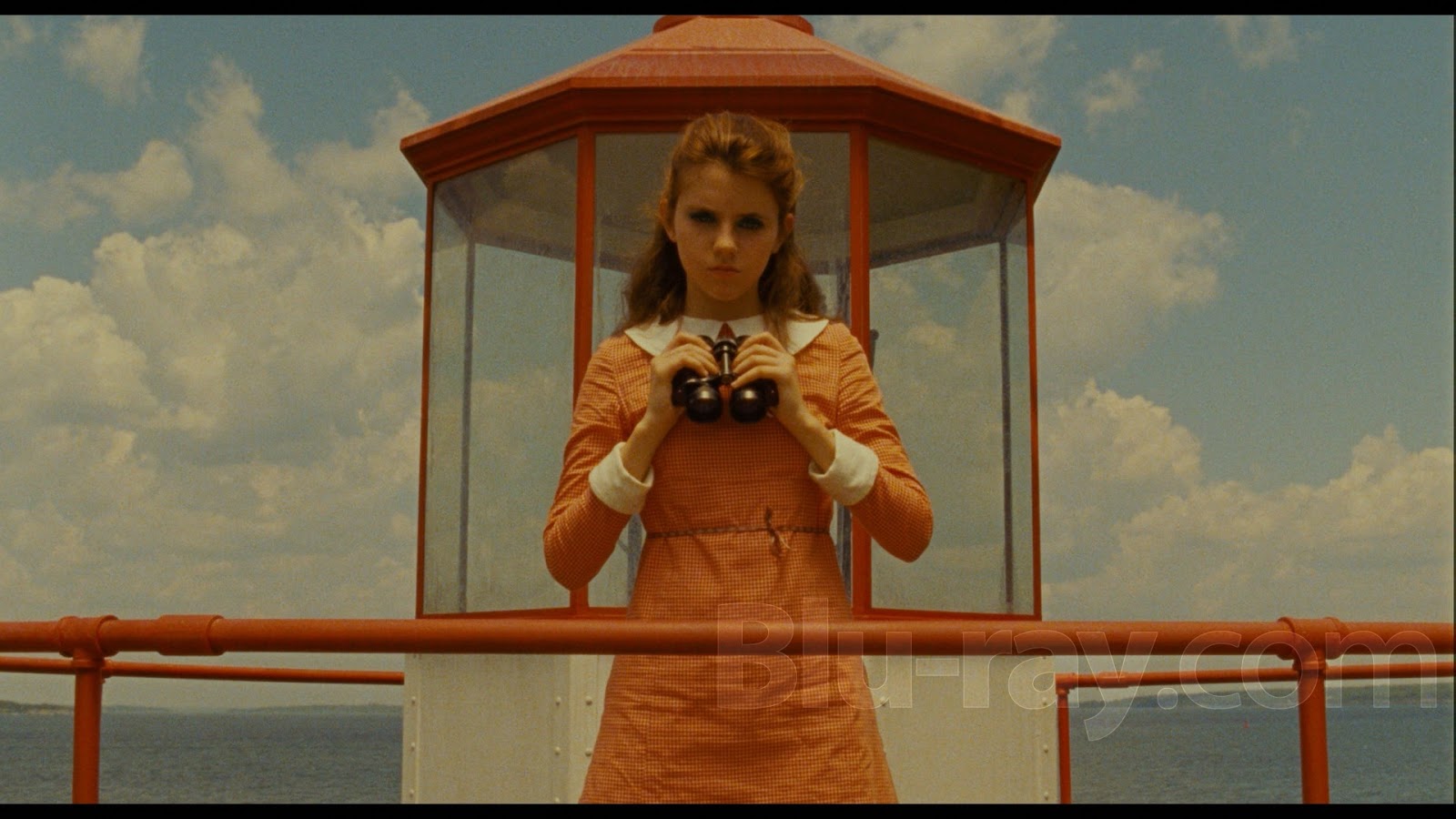
1  Moonrise Kingdom- No doubt in my mind, this is the best film of the year, and  nothing else came close.  Yes, it is a film. It was shot in super 16mm. The grainy, yellowish look fits beautifully with the fictional 1960s New Penzance Island. Wes Anderson has always been great at showing grownups who act as kids, which he still manages to do here most noticeable in Edward Norton's Scout Master Ward, but this time Anderson's focus is on two actual kids, acting as grownups, and their romantic escapades. Kara Hayward and Jared Gilman are hilarious and brutally honest as Suzy and Sam playing two kids who are madly in love, and don't care what anyone thinks of it. The soundtrack is also perfect, as usual for a Wes Anderson film. 


2 Dark Knight Rises- what is one more voice in the endless debate? I loved it, just like I loved Inception, The Dark Knight, The Prestige, Batman Begins, Memento, and Following. The only disappointing element of this film was that Alfred leaves midway through it and is not seen until the end. 

3 Skyfall- basically the same movie as Dark Knight Rises? Hero spends the first hour of the movie recovering from major injuries. The film is the third installment of a new series trying to reboot an old series. The list goes on and on. They even gave James Bond the abandoned mansion of his parents and a butler! 

4 The Hobbit: An Unexpected Journey- it was everything I hoped it would be. I cannot stress enough how much Andy Serkis deserves an oscar specially for playing Gollum/Smeagol. I understand that some people found the first half a little too slow, but I cannot get enough of the Shire and the backstory of Tolkien's rich mythology. .

5. Silver Linings Playbook- a return of the screwball comedy, which presents us an even battle between  two smart, wickedly funny members of the opposite sexes. A romantic comedy instant classic. The montage with Bob Dylan's "Girl from the North Country" was probably my favorite scene of any movie this year, but I could say that about any well placed Bob Dylan song in any film. 

6 Brave + La Luna- Both films are a part of this list. "La Luna" is an amazing coming of age tale of a little boy going into the family business, which happens to be cleaning the moon. The sights of the moon and the tiny stars that give it light are wonderful. I also love the fact that there is no real dialogue, but the film is still able to communicate its plot and themes effectively through purely visual methods. As for Brave, Scotland is a magnificent setting for the Pixar team to show off. Its simple, "brother bear ripoff" story does not detract from its charm. It actually portrays accurately the way young girls interact with their mothers without dehumanizing either one. That is in no way simple. I also love all Scottish accents, as well as Merida's three little brothers who were hilarious (especially as tiny bears) without any dialogue! 


7 Lincoln- Steven Spielberg does not glorify Lincoln. He was a politician. He knew that if he passed the thirteenth amendment, he would crush the South's economy. The film focuses on that fact and does not try to portray Lincoln as an abolitionist who passed the amendment for any moral obligation. It was simply the smart thing to do. Daniel Day Lewis also refuses to make Lincoln into the hero he is seen as today. Lincoln loses patience and yells at his wife, ignores his oldest son, and goes behind the back of his trusted friend and Secretary of State. He is old, and weak, always hunched over with a warm drink in his hand and a warm coat or blanket over his shoulder. All of this is came as a brilliant shock. I should have trusted Spielberg had the courage to show Lincoln as what he was, human. 

8. Once Upon a Time in Anatolia... 

9 Cloud Atlas- I feel that I should have left this film with more questions. But despite my disagreements over certain philosophies the film clearly endorses, I still consider this a great film. It manages to tell 6 compelling stories in under three hours, jumping back and forth through space and time all without ever confusing me. The segments seem build up in action, then quiet down together. The relationship between stories is hard to grasp, but Omer Mozaffar explained it best: 

So, is there are a relationship between the scenes? The answer is of course yes, and of course no. We automatically get a sense of progression when we jump from scene to scene. But, we can, however, detect a series of waves, where a cluster of scenes do connect with each other structurally and thematically. Liberations take place simultaneously. Exposures to truth take place simultaneously. Transformations take place simultaneously. Love is lost and found simultaneously. On the flipside, perhaps there is no relationship between the scenes: it might be that I am sharing the themes as I have constructed them in my mind. I will not know, until I see the film again.

The film also has the best editing, score, and special effects of any film I have seen this year as well as six or seven amazing performances by Tom Hanks. It is marvelous storytelling, impeccable filmmaking.

10 The Grey- Liam Neeson was awesome. The wolves were scary. I jumped of fright several times. I was expecting those things. What I was not expecting was a thoughtful meditation on suicide, human nature, the indifference of nature, and the existence of God.  The film focuses as much on the conversations of men who are about to be eaten by wolves as… the actual eating of the men by the wolves. It also featured the scariest plane crash of any movie ever, including "Flight."

11 Looper- logically brilliant! those are two of the last words I thought I would use to describe a time traveling movie, but its finally here. The conclusion of the film is incredible, and flawless in tying up all loose ends. Joseph Gordon Levitt is not afraid to be an unlikable, selfish drug-addict-murderer, but we end up rooting for him anyway. The violent, crime infested  future portrayed in the film is too close to reality to take in comfortably. This film makes you ask some tough questions. where is the world heading? Do I really want communist China to be the best place to travel to in the future? What is wrong with Joseph Gordon Levitt's face?

 12. Side By Side- a documentary that has every right to be in the top of any list. Keanu Reeves conducts many interviews with famous directors and cinematographers to ask them, the experts, about the differences between the old photochemical film process, and the new fully digitized world of movies. There are diehard film fanatics, like Christopher Nolan, and forward thinking proponents of digital, most notably David Fincher. Still, the most eloquent, and thoughtful of all interviewed was Martin Scorsese. He knows more about film, digital, and movies overall than anyone else. He is the one of the few who has made movies both digitally and photochemically, and he is the only one who seems perfectly ok with both mediums, pointing out the strengths and weaknesses of each. A true master. 

13. Argo- I knew the story coming in. 6 Americans hid in the Canadian ambassador's house in Iran during the revolution in 1979. The CIA produced a fake movie, pretended they were part of the crew, and got them out safely. I was not expecting to have sweaty palms, literally sitting at the edge of my seat during the final moments when it looks like they just might not make it past the final checkpoint. The 1970s, "All the President's Men" look is fanastic. John Goodman and Alan Arkin provide comedy gold as the real Hollywood producers of the fake movie. Ben Afleck is becoming one of my favorite directors. I urge you to watch "The Town," which is my favorite film of his.

Honorary Mention- Liberal Arts, The Avengers, The Intouchables, Friends With Kids, Smashed, Flight, Premium Rush, The Secret World of Arriety. 

I have not yet seen Amour, Zero Dark Thirty, Holy Motors, Django Unchained, or Les Miserables. From what I've read about them, they all seem like possible top 10 contenders. 

Wednesday, December 26, 2012

Little Women (1994)


Little Women is an extremely emotional film. But it never feels like a manipulative film. The movie earns its emotions, as Matt Zoller Seitz put it, "through dedication, intelligence, and love." I think the movie can be nicely explained through those three words. 

Dedication- Little Women is extremely dedicated to its source. In turn its source, Louisa May Alcott's novel of the same name, is dedicated to the lives of the March clan, a family living in Massachusetts in the late 1860s during the American Civil War. Because of the war, the father of the family, as well as many of the local men, are largely absent from the story. The film, however, shows in great detail the lives of the women they left behind. It is the film's dedication to both the pleasures and pains of the everyday life of the March women that makes it earn its emotions. "Because Little Women acknowledges suffering," writes Seitz "and how tough it is to endure without becoming embittered or cynical, it never crosses the line into outright sentimentality. It's a very emotional movie, but it isn't sappy. It's alternately tender and tough." 

The little women with their mother
The film is not afraid, for example, to show the ailments and demise of Beth, one of the young sisters. It is also not afraid to show the artistic compromises Jo (the writer, protagonist and second oldest sister) has to make in order to make a living and support her family. The film refuses to avoid some of the grim realities of these women who have "fallen on hard times." But this film also takes great pleasure in showing the marvelous theatrics of the March sisters. And, yes, it is particularly interested in their romantic endeavors. The film is dedicated to showing every detail, good or bad. 

Intelligence- the movie raises some pertinent and genuinely interesting questions such as what is the role of women in society? How can a woman follow both her unique path through life while at the same time, staying at harmony with a society of different values? One of my favorite moments of the film has the mother of the March family, played wonderfully by Susan Sarandon, writing a letter to the school of one of her daughters instructing the teacher as to why physical punishment and  humiliation are unacceptable tools for disciplining a child in a classroom. The mother offers some splendid advice to her daughters throughout the movie, here are some of my favorites: 

"Feminine weaknesses and fainting spells are the direct result of our confining young girls to the house, bent over their needlework, and restrictive corsets. "

"Oh, Jo. Jo, you have so many extraordinary gifts; how can you expect to lead an ordinary life? You're ready to go out and - and find a good use for your talent. Tho' I don't know what I shall do without my Jo. Go, and embrace your liberty. And see what wonderful things come of it. "
Trini Alvarado as Meg
"I would rather Meg marry for love and be a poor man's wife than marry for riches and lose her self-respect."
To Jo, after Amy burnt her manuscript she says  “It is a very great loss and you have every right to be  put out. But don't let the sun go down on your anger. Forgive each other, begin again tomorrow."
Finally, and most importantly, she offers that “If you feel your value lies only in being merely decorative, I fear that someday you might find yourself believing that's all you really are. Time erodes all such beauty, but what it cannot diminish is the wonderful workings of your mind."
Claire Danes as Beth
The daughters too, have some wisdom to share. Beth, as played by Claire Danes, seems like an old, wise soul confined in a young, frail body. Her warmth and kindness, which led her to bring food to a local family near starvation, also indirectly made her catch a disease which would eventually claim her life. But Danes never panics, and expertly controls her famous “cry face.” She is mostly calm and subdued.

 From her deathbed, Beth, who lived a quiet and peaceful life, counsels her sister Jo:

Beth- If God wants me with Him, there is none who will stop Him. I don't mind. I was never like the rest of you... making plans about the great things I'd do. I never saw myself as anything much. Not a great writer like you. 
Jo- Beth, I'm not a great writer. 
Beth-  But you will be. Oh, Jo, I've missed you so. Why does everyone want to go away? I love being home. But I don't like being left behind. Now I am the one going ahead. I am not afraid. I can be brave like you. 

Winona Ryder as Jo
Love- A surprisingly young Christian Bale plays Laurie, a man who falls helplessly in love with Jo. However, he slowly finds out, as I did while I watched the film, that he's hopelessly in love with all of these little women. In one scene, Laurie rescues Amy from drowning in a frozen pond. In another, he promises to care for her when unfortunate circumstances separate her from her family. In one sweet, amusing moment, he playfully tells Amy he will kiss her at least once before her death. Theirs is one of the loveliest love stories ever put on film. Kirsten Dunst, who plays the young Amy (there is another actress who plays the older Amy), is absolutely radiant. Out of an insanely talented cast, she shines brightest. The film also chronicles the dealings of the oldest sister, Meg, with a “higher” social class, as she wonders what life could be if she had money, as well as her unlikely relationship with an unattractive, penniless tutor. It is full of both love and romance.
Kirsten Dunst as young Amy
I hope that I have given you a glimpse at the magnificent  work of art that is this movie. I went into Little Women with low expectations,  thinking I would get an overtly manipulative movie. I was not prepared for such a deeply moving portrait of four fascinating little women, and their supporting cast, of course. I leave you with a word from the director. 

"I think the title [of Little Women] has been so off-putting for men over the generations. They feel this is a terribly 'girly' story. But it's actually a wonderful epic tale about family where men's roles are just as important and deeply involved in the story... It is... full of heartfelt emotion and such memorable characters whose lively appeal transcends the years." - Gillian Armstrong 

Verdict- 4/4 
Little Women (1994) PG 1h 55min. 

Random Thoughts
- the link to Matt Zoller Seitz's review http://www.dallasobserver.com/1994-12-22/film/natural-women/
- I was surprised to see Gabriel Byrne, the Irish actor, with a German accent. Although it threw me off, I think he gives a perfectly good performance.